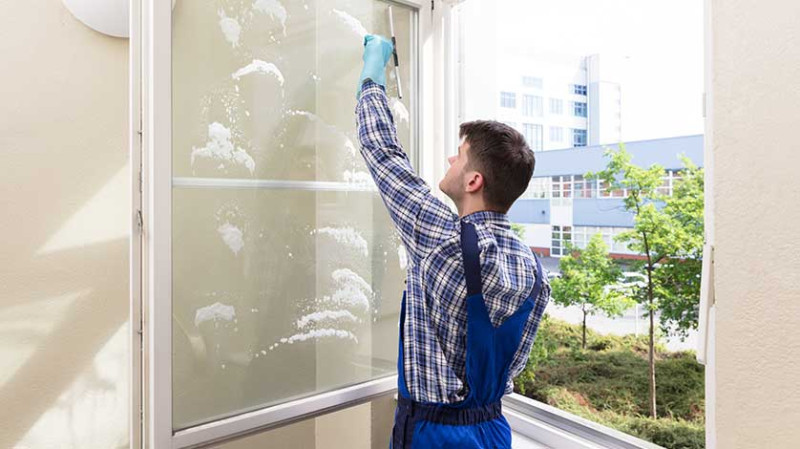
Finding the best window cleaning in the UK means knowing what separates a professional from someone who'll leave streaks and damage your frames. This guide walks you through comparing local window cleaners by price, accreditation, method, and insurance, so you can hire with confidence. We've included real UK costs, what to look for in a quote, and red flags that should make you walk away.
What Makes a Window Cleaner "Best" in the UK?
The best window cleaners aren't always the cheapest. A good cleaner arrives on time, uses the right equipment for your windows (traditional squeegee, water-fed pole, or rope access for high-rises), carries public liability insurance, and cleans without streaks or water marks. They'll have accreditation from the British Window Cleaning Federation (BWCF) or similar trade body, and they'll be happy to show you a current insurance certificate before starting work.
Regional prices vary significantly. In London, a semi-detached house window clean costs £80–£150 per visit, while the same job in rural Scotland or Wales might run £50–£80. Commercial properties with multiple storeys use rope access or water-fed pole systems, which cost more but are essential for safety compliance.
How Much Should Window Cleaning Cost?
Window cleaning prices in the UK are usually quoted per visit, with discounts for regular contracts (fortnightly or monthly). A typical semi-detached house (20–30 windows) costs £60–£120 for a one-off clean; a detached house (30–40 windows) costs £80–£150. Terraced properties are cheaper at £40–£80 because they have fewer external surfaces.
Several factors push prices up:
- Height and access: Three storeys or more requires ladders, water-fed poles, or rope access; prices double or triple.
- Conservatories and skylights: Add £15–£40 depending on size and condition.
- Gutters and fascias: Cleaning gutters adds £30–£70; jet-washing exterior walls adds £0.50–£2 per square metre.
- Frequency: Monthly cleans cost 20–30% less per visit than one-off cleans; annual contracts offer the best rates.
- Location: London and the South East charge 25–40% more than Midlands or North.
Avoid quotes under £30 for a full house. These usually mean a quick rinse with a squeegee and no attention to frames or sills. You'll often need a re-clean within weeks.
Window Cleaning Methods: Which Is Best?
Three main methods dominate the UK market, each with pros and cons.
Traditional Squeegee and Soap
The cleaner uses a ladder, bucket, squeegee, and cloth. This is slow and labour-intensive but produces excellent results on ground-floor windows and where access is easy. Best for small terraced houses, period properties where a ladder won't damage anything, and spotless results. Cost: £40–£80 for a small property.
Water-Fed Pole
A long carbon-fibre pole with a brush head and filtered water (often deionised) cleans windows from ground level without ladders. The cleaner stands safely on the ground and controls the brush remotely. This is the industry standard for semi-detached and detached homes because it's faster, safer, and reaches first-floor windows. Water spots are rare because deionised water leaves no minerals. Cost: £60–£120 for a medium house; takes 45 minutes to 1.5 hours.
Rope Access and Abseiling
For high-rise buildings (offices, flats, shopping centres), trained rope access technicians abseil from the roof with safety harnesses and cleaning equipment. This is the only legal method for buildings over four storeys. Cost: £200–£800 per day for a team, depending on building height and complexity. Always verify the company holds IRATA (International Rope Access Trade Association) certification; without it, they're breaking Health and Safety regulations.
What to Check Before Hiring a Window Cleaner
Three things separate trustworthy cleaners from cowboys: insurance, accreditation, and reviews. Don't skip these checks.
Public Liability Insurance
Any cleaner working on ladders or water-fed poles must carry public liability insurance of at least £1 million. Ask to see the certificate, not just a claim that they have it. The certificate should show the cleaner's business name, the coverage amount, and an expiry date in the future. If they refuse or can't produce one, don't hire them. If they damage a window, gutter, or crack a pane, their insurance covers your claim. Without it, you're liable.
Accreditation and Membership
Look for membership of:
- British Window Cleaning Federation (BWCF) — the largest UK trade body; members must follow a code of practice and liability standards.
- Federation of Small Businesses (FSB) — indicates a registered, tax-compliant business.
- Checkatrade or Trustmark — independent verification schemes with ratings and reviews.
- IRATA (rope access only) — legally required for high-access work.
Check accreditations directly on the awarding body's website. Many cowboys claim memberships they don't hold.
References and Reviews
Ask the cleaner for three recent customer references with contact details and addresses. Check online reviews on Google, Trustpilot, or Checkatrade. Red flags: no reviews, only negative feedback, or responses that blame customers rather than taking responsibility. Good cleaners will have dozens of 4–5 star reviews mentioning reliability, no streaks, and fair pricing.
Comparing Window Cleaning Quotes
Get quotes from at least three cleaners. A good quote includes:
- Business name, contact details, and insurance certificate reference.
- Number of windows, or a visual assessment and description.
- Price per visit and discount if you book monthly or annually.
- What's included: inside windows, frames, sills, gutters, conservatories.
- Method used: water-fed pole, squeegee, rope access.
- Estimated time and any access restrictions (e.g., "customer to ensure gates are unlocked").
Avoid quotes that are vague ("from £50") or missing the above details. The cheapest quote isn't always the best. A quote 30% cheaper than competitors usually means they'll rush the job or cut corners on safety. Compare the three middle quotes, not the extremes.
Window Cleaning Frequency: How Often Should You Book?
Most UK homeowners clean windows once or twice a year, but it depends on exposure and weather.
- Urban/city centres: Monthly or every 6 weeks due to pollution and rain marks.
- Coastal properties: Every 4 weeks as salt spray stains quickly.
- Rural/suburban: Every 8–12 weeks with less pollution.
- Heavily shaded (near trees): Every 6–8 weeks due to moss and algae growth.
Booking a standing order (monthly or quarterly) locks in a 10–25% discount compared to one-off cleans. Most cleaners offer auto-payment by direct debit, making it hassle-free.
Red Flags and How to Avoid Cowboy Cleaners
Watch out for these warning signs:
- Cash only, no receipt: Likely unregistered for tax; no comeback if something goes wrong.
- No insurance certificate: You're liable for any damage; walk away immediately.
- Pressure to pay upfront in full: Legitimate cleaners take payment on completion or via standing order.
- Vague about method or time: A professional quotes a specific method and time estimate; evasiveness suggests they're improvising.
- No phone number, only text or messaging: Hard to reach if something goes wrong.
- Overly cheap quotes: Anything 50%+ below competitors usually means they'll rush or damage windows.
Frequently Asked Questions
How often should I have my windows cleaned?
Most homeowners clean windows 2–4 times a year. In coastal areas, monthly is better due to salt spray. Urban properties benefit from every 6 weeks. If windows are shaded by trees, moss grows faster and you'll need monthly cleaning to prevent permanent staining.
Is it worth paying more for a fully insured cleaner?
Yes. If an uninsured cleaner breaks a window or gutter, you pay for repairs out of pocket, which easily costs £200–£500 per pane. Insured cleaners add £5–£15 to your bill but protect you completely. It's non-negotiable.
Can I clean windows myself instead?
For ground-floor windows, yes. A basic bucket, cloth, and squeegee from B&Q cost £20–£40. For anything higher, ladders are risky (falls account for 70% of home injuries). At first-floor height, a professional water-fed pole system is safer and often costs only £15–£20 more than DIY materials when you account for your time.
What should a window cleaning quote include?
A proper quote lists the number of windows, method (water-fed pole or squeegee), price per visit, any extras (gutters, conservatories), discount for regular cleaning, and the cleaner's public liability insurance reference. Vague quotes like "from £50" are a red flag.
How do I check if a window cleaner is properly qualified?
Ask for their public liability insurance certificate and check it's current. For rope access (high buildings), verify IRATA accreditation on the IRATA website. Check Google reviews and Checkatrade ratings. Contact one or two previous customers directly to confirm quality. A legitimate cleaner will have all three and be happy to provide them.
Compare trusted window cleaning providers near you. QuoteBank shows you verified local businesses — you pick who contacts you. No cold calls, no obligation.
Trending articles